
About SampleMaker
The people, ideas, and history behind the software
The people, ideas, and history behind the software
SampleMaker owes its existence to three brilliant minds: Isaac Newton, Ivan Sutherland, and Martin Newell.
Isaac Newton: Laid the mathematical foundation for modern parametric and constraint‑solving systems. His development of Newton’s Method introduced an iterative numerical technique for rapidly converging on solutions to complex equations using derivatives.
This approach is now a core engine behind nonlinear optimization, geometric constraint solving, and parametric modeling in today’s engineering and CAD software. Newton’s insight—that equations can be solved through systematic refinement—directly enables the dynamic, adaptive behavior of modern parametric design tools.
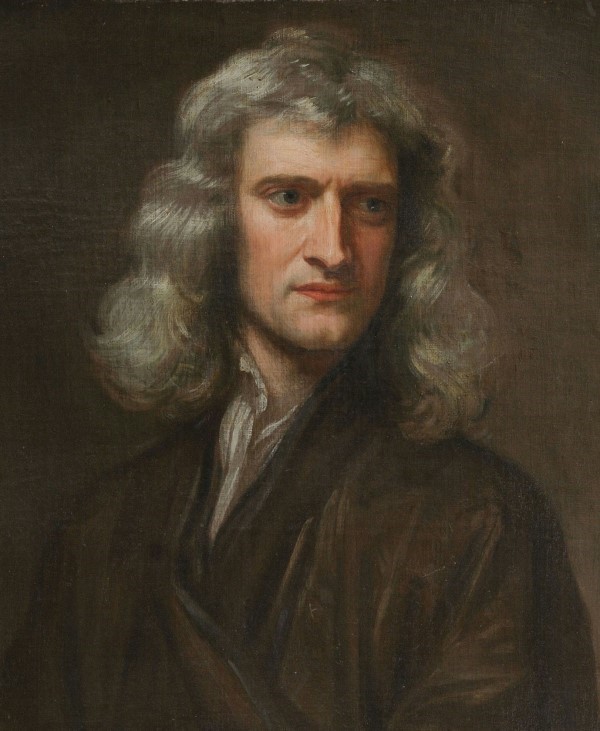
Newtonian mechanics and calculus (Wikipedia)
Ivan Sutherland: Pioneered parametric computer mathematics and computer graphics, most notably through his groundbreaking work on the MIT Sketchpad in 1962.
In Sketchpad, Sutherland introduced ideas that define modern CAD: parametric geometry, constraint-based drawing, and interactive solving of geometric relationships. To satisfy these constraints, the computer must solve systems of nonlinear equations—the kind of problem well suited to Newton-style numerical methods. Today's geometric constraint solvers in 2D and 3D CAD still follow this pattern, treating constraints as systems of equations and solving them numerically using techniques derived from Newton's framework.
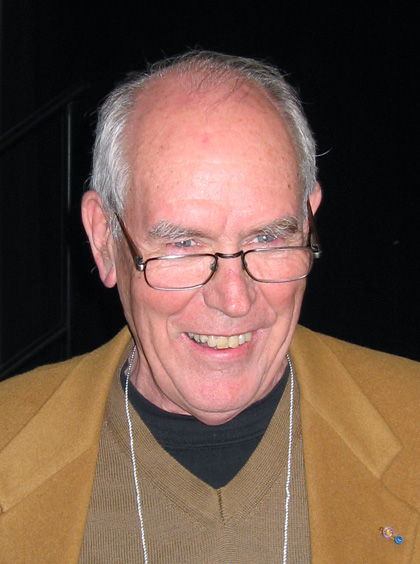
Interactive computer graphics and Sketchpad (Wikipedia)
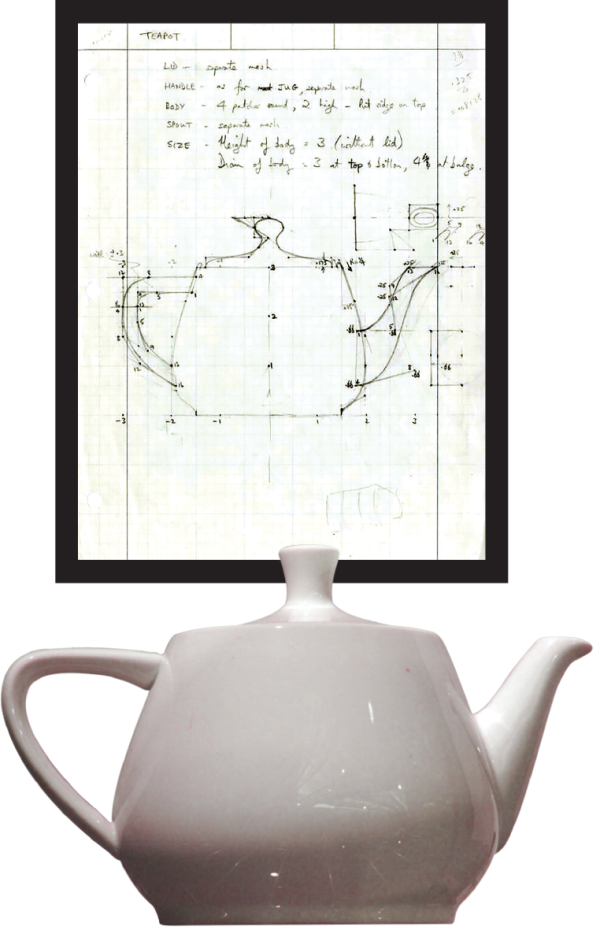
Martin Newell: Best known for creating the iconic 3D computer-generated teapot. He also founded Ashlar-Vellum, whose Vellum-CAD software utilized Sutherland’s parametric resolver technology. Newell introduced tools like the Drafting Assistant and Smart Cursor, revolutionizing computer-aided drafting.

Michael Collins, the creator of SampleMaker, began collaborating with Newell in the 1990s to develop a packaging CAD program called Ashlar-Score!. At the time, Collins had over a decade of experience as a structural packaging designer and had been using parametric CAD since 1983. He first learned parametric design using AEI CAD, specializing in packaging and point-of-purchase (POP) displays.
With Collins’s eight years of parametric CAD experience and Newell’s programming expertise, the two made rapid progress. Over a single weekend, Newell wrote the core scripts in PostScript, and within weeks Collins developed a parametric box library. Together, using Ashlar-Vellum CAD, they launched Ashlar-Score!.

Ashlar-Score! was eventually sold to Dimensional Impression, where Collins served as a consultant for 10 years. There he met lifelong friends Erin Hollandsworth and Sean Arney, both highly skilled structural packaging designers. Recently, the trio launched Motionalysis.io, which uses Collins’s Box Library and the Constrain Resolver from SampleMaker to allow box and display templates to be imported into any graphics program, with a web-based version also available.


Around 1997, Collins explored the PostScript code Newell had used for Score! and built plug-ins called Rules and SteelRules. These tools combined Collins’s parametric box library with advanced features for designing steel rule cutting dies. Arney, a language expert, learned the PostScript-based FE (Front End) language, and together they developed RulesSoftware.
In 2007, RulesSoftware and Ashlar joined forces to create AlphaCorr.
In 2017, Collins recalled Newell’s mention of the math resolver used in Ashlar-Vellum and began researching its origins. He discovered that Sutherland and Newell’s paths had crossed at the University of Utah, where Sutherland earned his doctorate at MIT by developing this style of parametric math resolver for computers.
Collins later found unrestricted source code published by Jonathan Westhues, which embodied the same type of parametric CAD technology used within SampleMaker. He directed the development of enhancements such as named variables and Boolean algebra, leading to the release of SampleMaker 1.0, a 2D version, in 2017.
By 2025, with the rise of artificial intelligence, Collins once again applied his packaging and CAD expertise to further develop SampleMaker into the powerful tool it is today.